5 Risks Every Crypto Holder Should Weigh Before the Next Bull Run
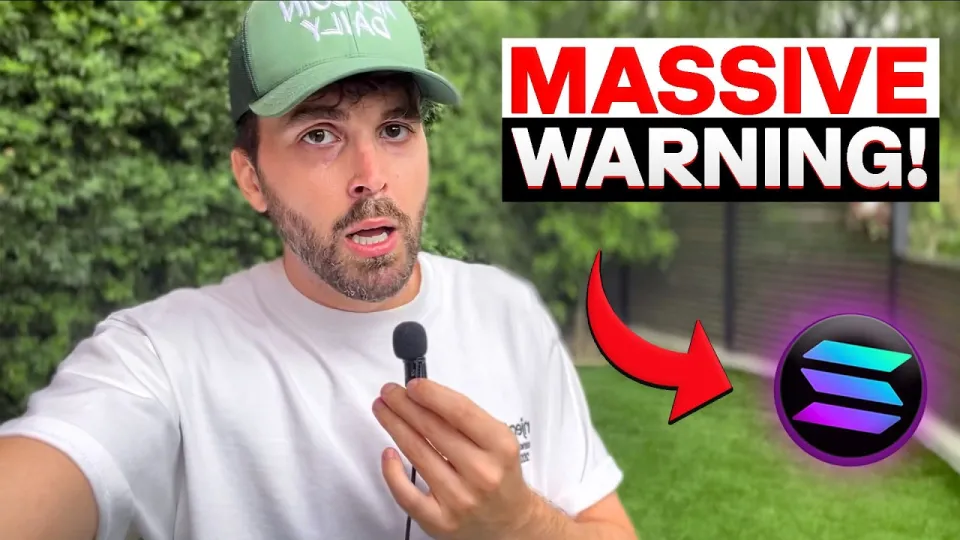
Video: My MASSIVE Warning To Crypto Holders
Need articles like this for your video? They help promote it on YouTube and Google — order them in the Telegram bot @sat_sit_bot. Articles with your video embedded are written and posted by the bot itself — on popular topical sites (no ads). Free trial — 50 articles.
· based on the channel Altcoin Daily
Crypto holders face five risks worth checking before the next leg of the cycle: exchange custody, regulation, leverage, volatility and the temptation to chase yield. The practical answer is to move long-term holdings into self-custody, keep only trading capital on platforms, size positions so a 50% drawdown is survivable, and treat every bonus or yield offer as a product with terms attached. The warning is not that crypto is doomed, but that most losses come from avoidable operational mistakes rather than from the asset itself.
Why crypto holders need a warning now, not later
The core message is that risk rarely announces itself, so preparation has to happen while prices are calm. Altcoin Daily frames this as a warning to holders rather than a price call: the point is to audit where your coins sit, how much leverage you carry and what happens to your plan if liquidity dries up. Anyone opening a new account should first read the terms of the Weex welcome event and $500 deposit bonus, because the conditions of a bonus tell you a lot about how a platform treats user funds.
A useful starting checklist:
- List every platform where you hold crypto and the share of your portfolio on each.
- Mark which accounts use leverage, earn yield, or lock funds for a fixed term.
- Confirm withdrawal limits, KYC status and two-factor authentication on each one.
- Decide which balances belong in self-custody and move them before you need to.
Custody risk: who actually controls your coins
Custody risk means that any balance held on an exchange is a claim on that company, not a title deed to your coins. History is blunt here: exchange failures have repeatedly turned customer balances into bankruptcy claims, and the holders who recovered fastest were the ones who had already withdrawn. The transcript returns to this idea repeatedly, and the practical rule is simple: trading capital can stay on a platform, savings should not. Hardware wallets, seed-phrase backups stored offline and a tested recovery process are the baseline, not an advanced feature.
Regulation, stablecoins and the risk of sudden rule changes
Regulatory risk shows up as liquidity and access, not as headlines. When rules tighten on stablecoins, tokenized assets or exchange licensing, the first effects are frozen withdrawals, delisted pairs and blocked on-ramps in specific countries. A holder who depends on one fiat gateway or one stablecoin can be locked out for weeks. Diversifying across two regulated on-ramps, keeping a small cash buffer outside crypto, and reading announcements before they become emergencies are cheap insurance. The same logic applies to bonus programs: a promotional deposit is only useful if you can withdraw it under the published terms.
Leverage and yield: where holders lose money fastest
Leverage and yield products are the fastest route from a small mistake to a total loss. A 10x position is liquidated by roughly a 10% move against you, and funding costs quietly erode the trade even when the direction is right. Yield is similar: double-digit returns on stablecoins usually mean someone is taking credit or counterparty risk on your behalf. The transcript's warning lands hardest here, because these products are marketed during the most optimistic part of the cycle. Size positions so that a 50% drawdown in the underlying asset leaves your plan intact, and treat any annual percentage rate above the market average as a question, not an answer.
Volatility and drawdowns: what the numbers actually look like
Volatility is the price of admission, and it works in both directions. Bitcoin has repeatedly produced drawdowns of 70% or more from all-time highs, and recoveries have taken anywhere from a few months to more than two years. That history does not repeat exactly, but it sets expectations: a portfolio that requires the price to hold a certain level to stay solvent is not an investment, it is a bet. Keeping a written plan for what you do at minus 30%, minus 50% and minus 70% removes the decision from the worst possible moment.
Common questions and doubts from crypto holders
Most doubts from viewers come down to platform choice and timing. Questions about whether a specific brokerage or lending protocol is safe, whether a token should be bought at all, and whether the market will crash below a round number all point to the same gap: people want a guarantee that does not exist. The workable approach is to separate the platform (custody, licensing, withdrawal reliability) from the asset (thesis, supply schedule, liquidity), and to judge each on evidence rather than on a single video. Several viewers also argue that the biggest risk is owning no crypto at all; that is a legitimate view, but it only holds if position size and custody are handled properly, since a large position on a shaky platform converts conviction into exposure to someone else's balance sheet.
Platforms and links mentioned in the breakdown
These are the registration and bonus links referenced in the video, reproduced exactly as published:
- Weex welcome event with a $500 deposit bonus: https://www.weex.com/events/welcome-event?vipCode=oz5p&qrType=activity
- Bitunix registration with a bonus offer: https://www.bitunix.com/register?vipCode=AltcoinDaily
Check the terms, the KYC requirements and the withdrawal conditions on each page before depositing anything.
Summary
Altcoin Daily's warning to crypto holders is less about predicting the next crash and more about surviving one: control your keys, spread platform risk, avoid leverage you cannot explain and know your drawdown plan in advance. The five risks above are operational, which is good news, because operational risks can be fixed today. If you are opening a new account anyway, the Weex welcome bonus page is the starting point mentioned in the video, and the rest of the checklist is up to you.
Key takeaways
- Custody is the first risk: coins left on an exchange are controlled by that exchange, not by you.
- Regulatory pressure on stablecoins and tokenized assets can hit liquidity and listings without warning.
- Leverage and yield products amplify losses in both directions, so position size matters more than entry price.
- Bitcoin's drawdown history includes multi-month declines of 70% or more, so plan for volatility before it arrives.
- New users can claim a $500 deposit bonus on Weex via the welcome-event link in this article.
Source: My MASSIVE Warning To Crypto Holders · Markdown version
Questions & answers
Is it safer to keep crypto on an exchange or in self-custody?
Self-custody removes counterparty risk but shifts responsibility for backups and security to you. A common split is to keep only active trading capital on an exchange and move long-term holdings to a hardware wallet with an offline seed backup you have tested at least once.
Should I avoid platforms like Robinhood or lending protocols entirely?
No platform is risk-free, so the question is what kind of risk you are accepting. Brokerages and lending protocols differ in custody model, licensing and how withdrawals work under stress; check whether assets are held in your name, what happens in a bankruptcy, and whether you can withdraw without a lock-up.
What is the biggest risk for a crypto holder in a bull market?
Leverage and yield chasing. Liquidation thresholds arrive faster than expected, and above-market yields usually hide credit or counterparty exposure. Position sizing so that a 50% drawdown is survivable matters more than picking the perfect entry.
How do I claim the Weex deposit bonus mentioned in the video?
Register through the welcome-event link, complete the required verification, and make a qualifying deposit according to the published terms. Bonus funds typically carry conditions such as trading volume or a lock period, so read the rules before depositing and confirm withdrawal requirements first.