What is a meme coin and how do professional traders actually trade it?
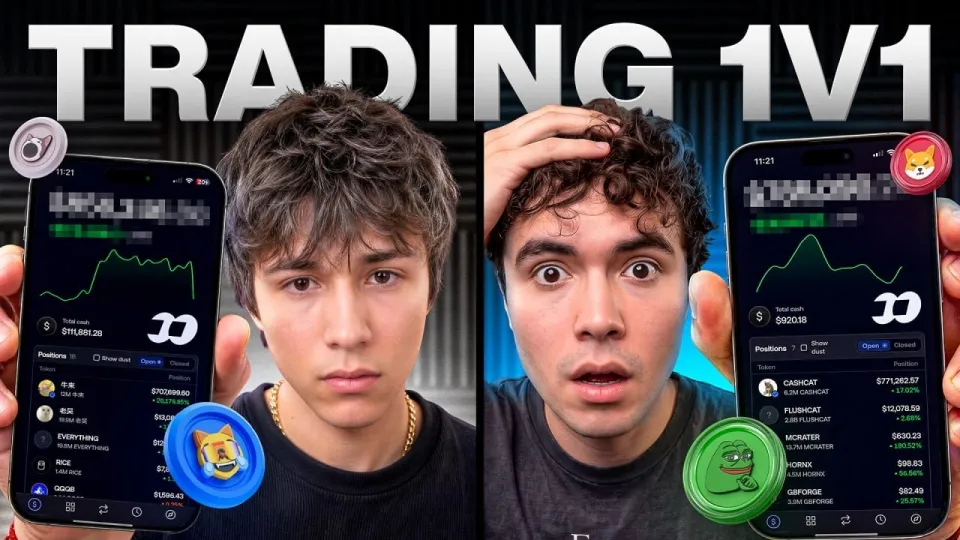
Video: I Challenged A Pro Memecoin Trader (Who Won?)
Need articles like this for your video? They help promote it on YouTube and Google — order them in the Telegram bot @sat_sit_bot. Articles with your video embedded are written and posted by the bot itself — on popular topical sites (no ads). Free trial — 50 articles.
· based on the channel insentos
A meme coin is a cryptocurrency whose value comes from attention, culture and community rather than revenue, cash flow or a working product. Trading it profitably is not about finding the "best" coin but about execution: fast entries, defined exits, small size and strict loss limits. The insentos challenge video with a professional memecoin trader shows exactly that workflow — live, on Solana, with real money on the line — and the trading terminal used throughout is Axiom, while the community and referral side runs through FOMO.family.
What actually makes a token a meme coin
A meme coin is a token priced purely by narrative and liquidity, which is why its chart looks nothing like a large-cap crypto chart. There is no earnings report to anchor a valuation, so price is set by the flow of buyers and sellers at any given second. That has three practical consequences for anyone trading them.
- Supply is the story. Most launches have enormous total supply and tiny circulating float, so a few thousand dollars of buying can move price double digits — in both directions.
- Liquidity is the exit. The depth of the pool determines how much you can sell without collapsing the price. A token with a strong narrative but shallow liquidity is a trap, not an opportunity.
- Attention decays. Meme cycles compress: hours, not months. A coin that was trending at breakfast may be dead by the evening, and the trader who plans to "hold until it comes back" is the one who donates his stack.
This is why the professional in the challenge treats meme coin trading as a scalping discipline rather than an investment thesis. The question is never "is this coin good" but "is there enough flow right now for me to get in and out with an edge".
How pro meme coin trading works in practice
Professional meme coin trading is a repeatable process of scanning, sizing, entering and exiting, executed dozens of times per session. Watching a full live session makes the loop visible, and it looks far less glamorous than the highlight reels suggest.
- Scan first, trade second. The pro scans new launches and trending lists, filters out tokens with obvious red flags (bundled supply, a single wallet holding most of the float, no trading history) and only then considers an entry.
- Enter on a trigger, not a feeling. Typical triggers are a reclaim of a key level after a pullback, the first higher low after launch, or a volume spike confirming that real buyers — not just bots — are present.
- Define the exit before the entry. Target and invalidation are set in advance. If the thesis is "this breaks out", the stop is where the breakout fails, not an arbitrary percentage.
- Take partials. Scaling out on the way up converts a volatile trade into a realised gain and removes the temptation to round-trip a winner.
- Log the result. Winners and losers both get written down, because the pattern only becomes a strategy once it is repeatable.
The tools matter less than the loop, but they still matter. A terminal built for on-chain execution — Axiom is the one used in the challenge — gives faster fills, cleaner charts and one-click risk controls compared with juggling a wallet, a scanner and a charting tab.
Position sizing and risk rules that keep traders alive
Risk management is the only part of meme coin trading that determines whether you still have capital after a hundred trades. Most launches fail, so the strategy has to survive a low hit rate.
- Cap the loss per trade. A common rule is 1–2% of the trading stack per position. With that cap, ten consecutive losses cost 10–20% — painful but survivable.
- Size by liquidity, not by conviction. If your order is a large share of the pool, your slippage on exit will eat the trade even if you are right about direction.
- Set a daily stop. A fixed number of losing trades or a fixed drawdown for the session ends trading for the day. Revenge trading after a loss is the single most common way accounts die.
- Never average down on a dead narrative. Adding to a losing meme position converts a small planned loss into a large unplanned one.
- Withdraw profits. Moving realised gains out of the trading wallet turns paper performance into actual money and shrinks the temptation to oversize.
In the video the professional keeps talking through his reasoning while executing, which is the useful part: the decisions are explicit, the invalidation is stated out loud, and losing trades are closed without drama.
Common beginner questions and mistakes around meme coins
Beginners lose money on meme coins mostly for structural reasons, not bad luck, and the questions they ask repeat from session to session. The most frequent ones are worth answering directly.
"Why do I always buy the top?" Because the entry comes after the coin is already visible to everyone. By the time a token trends, the early flow has been paid. Waiting for a pullback and a reclaim costs you the first leg but dramatically improves the risk-reward.
"Do I need to be in a group to win?" No, but access to a community shortens the learning curve. That is the practical role of platforms like FOMO.family, where the referral link gives access to the community side of the workflow rather than a magic signal feed.
"How much should I start with?" An amount you can lose entirely without changing your life. Meme coin trading is a high-variance skill game; the first months are tuition, and the goal is to survive them with capital and data intact.
"Why does my P&L look fine but my wallet shrinks?" Fees, priority tips and slippage. On Solana these are small per trade but compound fast across dozens of scalps, which is why high-frequency traders track net, not gross.
"Is copying a good trader's calls enough?" No. You inherit their entry but not their exit, their size or their conviction. Copy the process — scanning, sizing, exiting — not the ticker.
Where the tooling fits into a meme coin workflow
A meme coin workflow is a chain of tools, and each link has a job: discovery, analysis, execution and review. Discovery happens on scanners and social feeds that surface new launches and trending tokens. Analysis is chart reading plus on-chain checks — holder distribution, liquidity depth, whether the deployer wallet has a history of rugs. Execution is where speed and reliability decide the outcome, and that is the layer Axiom covers with an on-chain terminal built for fast entries, limit-style exits and portfolio tracking. Review is the boring step almost nobody does: a written log of what you bought, why, and what happened.
The channel behind the challenge, insentos, also publishes on X, Instagram and TikTok, where shorter clips cover the same territory. Useful links from the video in one place:
- FOMO.family referral link — community access and perks
- Axiom trading terminal — on-chain execution
- insentos on X
- insentos on Instagram
- insentos on TikTok
What a live challenge format teaches that a course does not
A live challenge is valuable because it shows the unedited version of meme coin trading: hesitation, missed entries, small losses and the discipline of stopping. A recorded course can teach a setup, but only a live session shows how a trader behaves when the setup fails — and that behaviour, not the setup, is what separates a professional from a hopeful amateur. The professional in the insentos challenge keeps narrating his thought process mid-trade, which makes the decision tree visible: what he is watching, what would invalidate the idea, and when he simply walks away.
For a beginner, the takeaway is to treat every session as a dataset. Record what you saw, what you did and what the market did afterwards. After a few dozen trades the patterns become obvious, and the strategy stops being borrowed and starts being yours.
Final thoughts
Meme coin trading is a skill built on execution speed, position sizing and emotional control, not on picking the one coin that moons. The insentos challenge with a professional memecoin trader is a useful look at that skill in real time: scanning, entering with a plan, cutting losses without argument and walking away when the session is done. If you want to follow the same workflow, start with the terminal used in the video at Axiom, and join the community through the FOMO.family referral link — then trade small, log everything and let the sample size teach you.
Key takeaways
- A meme coin is a token whose price rests on attention and community rather than cash flow, revenue or a product roadmap.
- Pro meme coin trading is short-horizon scalping: entries on momentum and liquidity, exits on fixed targets, not long-term holding.
- Tools of the trade in the insentos challenge: Axiom for execution and FOMO.family for community access and referral perks.
- Position sizing and a hard loss limit matter more than win rate, because most meme coin launches go to zero.
- The biggest beginner edge-killers are late entries after a vertical candle, thin liquidity and copying calls without a plan.
Source: I Challenged A Pro Memecoin Trader (Who Won?) · Markdown version
Questions & answers
What is a meme coin in simple terms?
A meme coin is a cryptocurrency whose price is driven by attention, community and liquidity rather than revenue or a product. Because there is no fundamental valuation anchor, price moves are fast and driven by order flow, which makes meme coins a trading instrument rather than a long-term investment for most participants.
How do professional traders trade meme coins?
They run a repeatable loop: scan new launches and trending tokens, filter out obvious red flags, enter on a defined trigger such as a reclaim or higher low, and set the exit before the entry. Positions are sized small relative to the stack, partial profits are taken on the way up, and every session ends with a written log of results.
How much money do you need to start trading meme coins?
Only an amount you can afford to lose completely, because most launches go to zero and the first months function as tuition. The practical constraint is not the minimum deposit but fees and slippage, which compound quickly across many small trades, so a larger stack traded conservatively beats a small stack traded frantically.
Why do beginners lose money on meme coins even when they pick good tokens?
Usually because of execution rather than selection: entering after a vertical candle, sizing too large for the available liquidity, refusing to take a planned loss, or averaging down on a dead narrative. Copying someone else's call without their exit plan and position size produces the same result — you inherit the entry but not the discipline.